
Ballet moms are done hiding their postpartum bodies—and they’re changing the rules of the stage
Elle.com
“We’re told we should do it ‘for the love of the art form,’ but we still have bills to pay and families to raise.”
Table of Contents
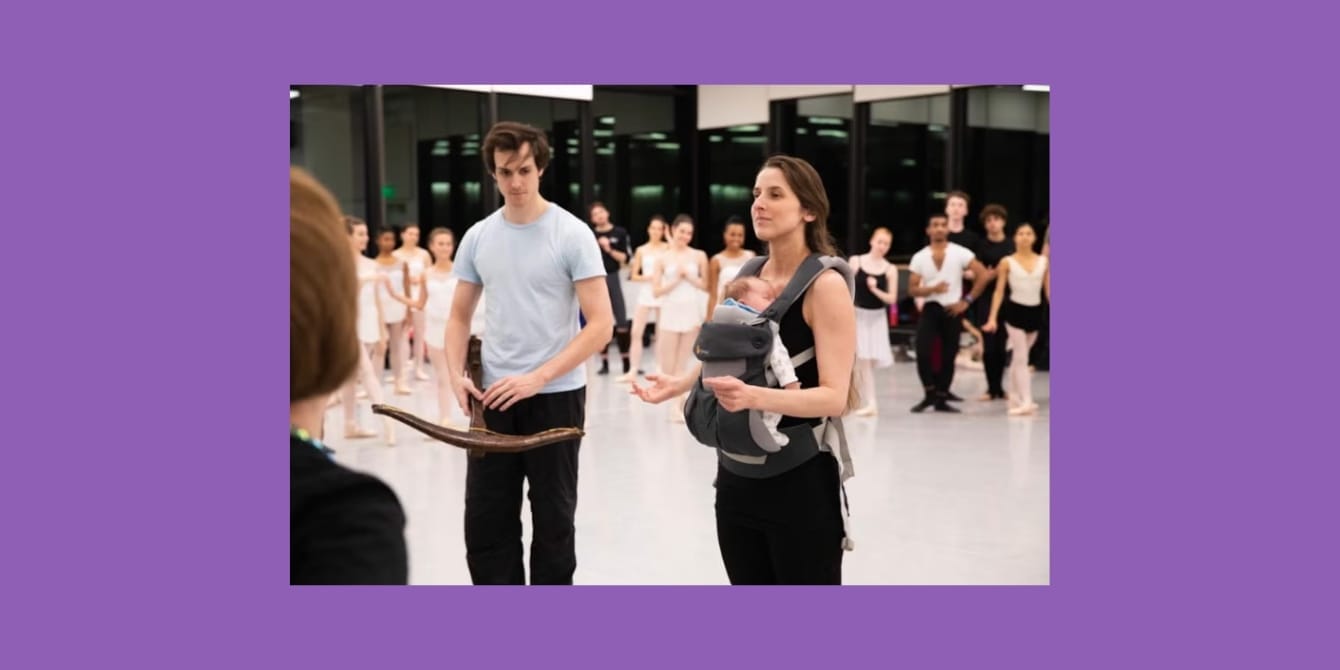
Imagine this: a ballerina, postpartum, in her leotard with electronic pumps tucked inside—because the show must go on, and so must breastfeeding. That was Allison DeBona’s reality as she returned to Ballet West after having her first child. She was praised for returning quickly—even as she battled exhaustion and postpartum depression behind the scenes.
Meanwhile, at American Ballet Theatre (ABT), Betsy McBride was performing Swan Lake just days after learning she was pregnant, before transitioning to teaching classes so she could keep her salary flowing as her body changed.
For generations, ballet companies have demanded that pregnancy be invisible. Maternity leave was unpaid or partial, dancers had to use up sick leave before they even gave birth, and postpartum bodies were seen as “inconvenient” to the art form. As Alexandra Basmagy, former ABT soloist, told ELLE, “We’re told we should do it ‘for the love of the art form,’ but we still have bills to pay and families to raise.”
But mothers in ballet have had enough. And they’re fighting back.
Related: “I’m not ready”: Mom’s heartbreaking video on returning to work after maternity leave hits home
How they challenged the old rules
Change didn’t come from a single dramatic moment. It was built slowly, through everyday acts of defiance and solidarity. When COVID-19 shut down theaters in 2020, dancers who were also moms formed a WhatsApp group to commiserate. They shared the painful truth: some companies offered no paid leave, others forced dancers onto unpaid leave early in pregnancy, while a lucky few let dancers do “light duty” jobs to keep earning.
Those conversations turned into action. At ABT, dancer-moms pushed for new contract language. In 2024, the company agreed to keep pregnant dancers on contract until they themselves chose to stop performing. The new agreement also added parental leave for non-birthing parents for the first time.
As Basmagy said of the change: “If I could do something to change the way the company runs for the people behind me, to make it easier or more inclusive, I’d want to be able to do that.”
Elsewhere, Ballet West had already won contract language allowing dancers to keep earning full salaries while doing office or teaching work before their leave began. Atlanta Ballet and New York City Ballet expanded maternity and family leave, too.
The broader reality for working mothers
If all this sounds a little too familiar, it’s because ballet’s old approach to motherhood isn’t unique. In many industries, pregnancy is still treated like a personal problem—one that must be minimized, hidden, or even punished.
Freelance creatives know the hustle: no HR department means no formal leave at all. Healthcare workers often work up to labor itself, or burn through sick days to care for a newborn. Startup founders talk about “planning their fertility” around funding rounds because they can’t afford to step away.
America remains the only wealthy country without a federally guaranteed right to paid leave. And that shows up in the data: the so-called “motherhood penalty” leaves women earning significantly less over their careers than men with similar qualifications.
Maternal health outcomes, particularly for Black and Indigenous mothers, continue to lag due to systemic neglect.
Related: U.S. moms lose an average of $9,500 thanks to unpaid maternity leave
Why this matters for all moms
What ballet dancers are demanding is bigger than new contract language. It’s about reclaiming the right to have a body that changes, a mind that needs rest, a life that makes space for rest, caregiving, and complexity beyond the demands of work. It’s a rejection of the idea that motherhood is a private inconvenience to be managed in the shadows.
It’s also an urgent reminder that the systems many of us navigate were built with men’s uninterrupted careers in mind. Changing them takes collective power.
The slow, hard-won progress in ballet offers a blueprint for other sectors. Just as these dancer-moms built solidarity through WhatsApp chats and collective bargaining, other professions are seeing similar movements: unionized journalists fighting for family leave in contracts; nurses demanding postpartum scheduling accommodations; tech workers pushing for better parental leave and remote options.
A hopeful finale (because change is happening)
Today, ballerinas like McBride and Zhong-Jing Fang at ABT can keep earning full salaries while teaching or staging work up to the point of birth. They’re modeling a new narrative—one where motherhood fuels creative power on stage, rather than pausing it.
As Fang put it, being both a dancer and a mother “is creating a full package of who you are becoming onstage.”
And that’s the message for all of us: The messy, powerful, transformative parts of motherhood deserve to be seen—and respected—in every space, including the workplace.
You can demand a world where motherhood is treated as essential to a more inclusive, human-centered way of working and living.
Because no matter your industry, moms deserve to be seen, heard, and supported.
Related articles


