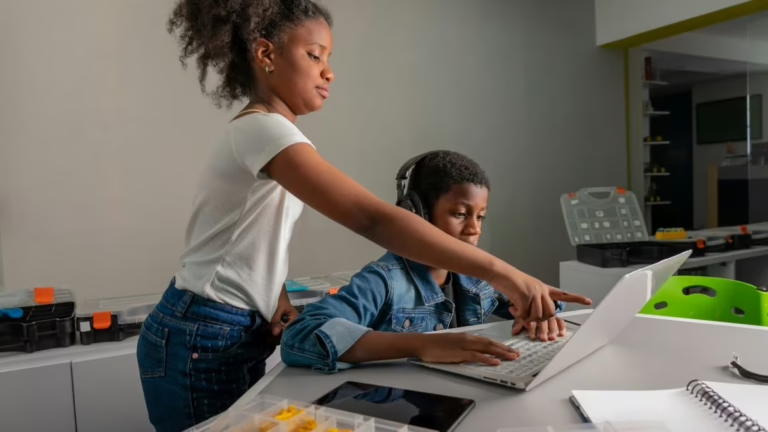
Organize sensory play activities to promote logic and motor skills

Credit: Canva/Motherly
A little structure turns sensory play from “messy fun” into a quiet engine for patterning, and problem-solving in an afternoon.
Table of Contents
Sensory play is more than bins and scoops. It is how kids test cause and effect, notice patterns, and build the hand and core strength that later supports writing, tying their shoes, and staying focused. The trick is organizing it so you are not reinventing activities every day. This guide gives you a simple shelf, a weekly rotation, and ready-to-use activities that connect sensory experiences to logic and motor skills without turning your home into a craft store. In fact, UNICEF emphasizes that play in the early years helps children build cognitive, social, and motor skills through simple, everyday interactions.
What to know first
Think “simple materials, clear goals.” Rice, water, play-dough, or kinetic sand become powerful tools when you name a purpose like sorting by attributes, repeating a pattern, or strengthening fingers.
Small doses of sensory play for the win. Ten to fifteen minutes of focused play beats an hour of chaos. Stop while it is still fun.
Your child’s cues lead. Offer choices, watch how they explore, then raise or lower the challenge. Sensory play is about co-regulation as much as learning.
Safety is step one. Choose taste-safe materials for toddlers, supervise closely with small items, and keep slippery play on a mat or tray. Wash hands before snacks.
Set up your sensory play shelf in one hour
Top shelf: “Core four” bases
Pick two dry (rice, pasta, beans) and two soft/wet (water, water beads for older kids, play dough, kinetic sand). Store each in a labeled, lidded container.
Middle shelf: tools that build motor skills
Tongs, scoops, funnels, turkey baster, eyedroppers, small pitchers, measuring cups, silicone muffin tray, paintbrushes, child-safe scissors, mini rolling pin.
Bottom shelf: logic boosters
Counting bears or buttons, pattern cards, colored pom-poms, shape blocks, number tiles 1–10, two sets of small containers for “in/out” and “sort.”
Add a “yes space.” Place a wipeable mat or large tray on the floor or table. The rule: materials stay on the mat. Keep a small broom and hand vac nearby.
A weekly rotation you can actually keep
- Monday: Pour + transfer (water or rice)
- Tuesday: Squish + cut (play dough with scissors and stamps)
- Wednesday: Sort + pattern (buttons or pom-poms)
- Thursday: Build + balance (blocks + kinetic sand base)
- Friday: Mix + create (oobleck or foam; outdoor if possible)
Post this where your child can see it with simple pictures. Consistency helps them anticipate what is coming and reduces requests for an entirely new setup.
Step-by-step plan for each sensory play activity session
- Name the job. “Today, your hands are scientists. We are going to pour and stop at the line.”
- Model once. Show the motion slowly. Keep your words short.
- Let them try. Step back, narrate occasionally, and resist over-helping.
- Add a tiny challenge. “Can you fill three cups in size order?” or “Make a red-blue pattern.”
- Close with a ritual. “Two scoops, then tidy.” Sing a 30-second clean-up song and use a small dustpan together.
Activities that target logic + motor, by goal
1) Sorting by one or two attributes (logic + fine motor)
Set up: Two bowls, a mixed tray of objects (buttons, caps, pom-poms).
Invite: “Sort by color.” For older kids, add “and by size.”
Upgrade: Use tongs for transfer. Add a timer for a playful challenge.
2) Pattern lab (logic, sequencing, working memory)
Set up: Make a simple strip: ABAB with two colors of blocks.
Invite: “Copy my pattern, then make a new one.”
Upgrade: Move to AAB or ABC. Ask your child to “read” the pattern out loud while tapping.
3) Fill to the line (hand strength, grading force, visual judgment)
Set up: Water in a pitcher, clear cups with tape lines at different heights, and funnels.
Invite: “Pour to the line and stop.”
Upgrade: Add eyedroppers to top off to the exact mark. Introduce measuring spoons.
4) Scoop + dump relay (bilateral coordination)
Set up: Bin of rice, small cups, and a muffin tin.
Invite: “Use the scoop to fill each muffin pocket.”
Upgrade: Switch hands. Use a narrow-neck bottle to challenge aim.
5) Dough cuts and snips (hand strength, pre-writing)
Set up: Play-Doh, child-safe scissors, craft sticks, stamps.
Invite: “Roll a snake, then cut three pieces.”
Upgrade: Press stamps to make a sequence, then cut on the stamped “lines.”
6) Tongs highway (pincer grasp, hand separation)
Set up: Painter’s tape path on a tray, pom-poms as “cars,” tongs.
Invite: “Drive pom-poms along the road into parking spaces.”
Upgrade: Add stoplights with colored dots. Say the rule: green go, red stop.
7) Marble maze for bigger kids (planning, persistence)
Set up: Shoe box lid, straws taped as walls, one marble.
Invite: “Get the marble from start to finish without falling off the path.”
Upgrade: Add dead ends. Time it and try to beat their own score.
8) Heavy work builder sensory play (core strength, regulation)
Set up: Small basket, wooden blocks, painter’s tape, “construction site.”
Invite: “Carry blocks to the site and stack by size.”
Upgrade: Add a simple blueprint drawing to copy.
9) Mystery bag (tactile discrimination, language)
Set up: Cloth bag with familiar objects.
Invite: “No peeking. Feel and guess.”
Upgrade: Sort by category after guessing: kitchen, art, outdoors.
10) Sound sort (auditory attention, logic)
Set up: Three lidded containers with rice, beans, and pasta inside.
Invite: “Shake and match the sounds to labels: quiet, medium, loud.”
Upgrade: Hide matching pairs for a sound memory game.
Connect the dots with quick “teacher moves”
- Name the skill. “You noticed the pattern changed. That is problem-solving.”
- Ask one thinking question. “How did you know which cup was bigger?”
- Reflect the effort. “Your hands kept trying even when it spilled.”
- Capture a photo. Print one weekly picture for a simple progress wall.
Adapting by age and stage
Toddlers (1–3)
Keep pieces large and taste-safe. Focus on pouring, scooping, in/out, and single-attribute sorting. Sit close and model.
Preschoolers (3–5)
Add counting, simple patterns, and tool variety. Introduce early scissors skills with thick play dough “snakes.” Offer two-step directions.
Early grade school (5–7)
Layer rules (sort by color and size), timed challenges, simple measurement, and beginner blueprints. Invite them to design tomorrow’s setup.
Sensory-smart tips for different profiles
- Seeker: Offer heavy work (carry, push, knead) before fine-motor tasks.
- Avoider: Start with soft textures and slow volume. Keep a towel and wipes visible.
- Mixed: Offer a “safe spot” towel beside the mat where they can pause and watch.
- Easily frustrated: Use fewer pieces, shorter tasks, and quick wins before adding challenge.
Your 10-minute tidy routine
- Two-minute warning: “Two more scoops.”
- “In the bin” game: race the pieces home.
- Shake out the mat into the bin.
- Wipe tools; air-dry in a dish rack.
- Snap a picture of the final build for your progress wall.
A one-page planner you can copy
This week’s base: ______
Motor focus: grip / bilateral / scissor/core
Logic focus: sort/pattern / compare / sequence
New tool to try: ______
Challenge to add by Friday: ______
Note one win: “Today they… ______”
Troubleshooting
It gets wild fast.
Shrink the setup: fewer tools, smaller mat. Start with you as the “model,” then hand over one tool at a time.
They only want to pour.
Honor the favorite, then nudge: “Two pours, then try the tongs for one minute.”
Huge messes drain you.
Choose beans over rice, kinetic sand over water on busy days. Bins with higher walls contain more.
They say it is boring.
Switch the goal, not all the materials. Keep the same rice, add pattern cards or a counting mission.
When to stretch or call in support
- If fine-motor tasks consistently cause distress or avoidance, slow down and return to bigger tools and heavy work.
- If you notice challenges with grasp, hand use, or attention that persist across settings, bring your observations to a trusted provider for tailored ideas.
- If sensory play ramps them up, move it earlier in the day and end with a calming routine like books or deep-pressure squeezes.
If you’re watching skills over time and want to refer to an additional guide, age-based tips and milestone resources from the CDC can help you know what to encourage next and when to ask a provider for guidance.
The gentle takeaway
A well-organized sensory routine is small but mighty. With a tidy shelf, a short rotation, and clear goals, you turn everyday materials into steady practice for logic and motor skills—and you make it sustainable for yourself. Keep sessions brief, follow your child’s lead, and celebrate the effort more than the outcome. Little hands and curious minds will do the rest.
Related articles